
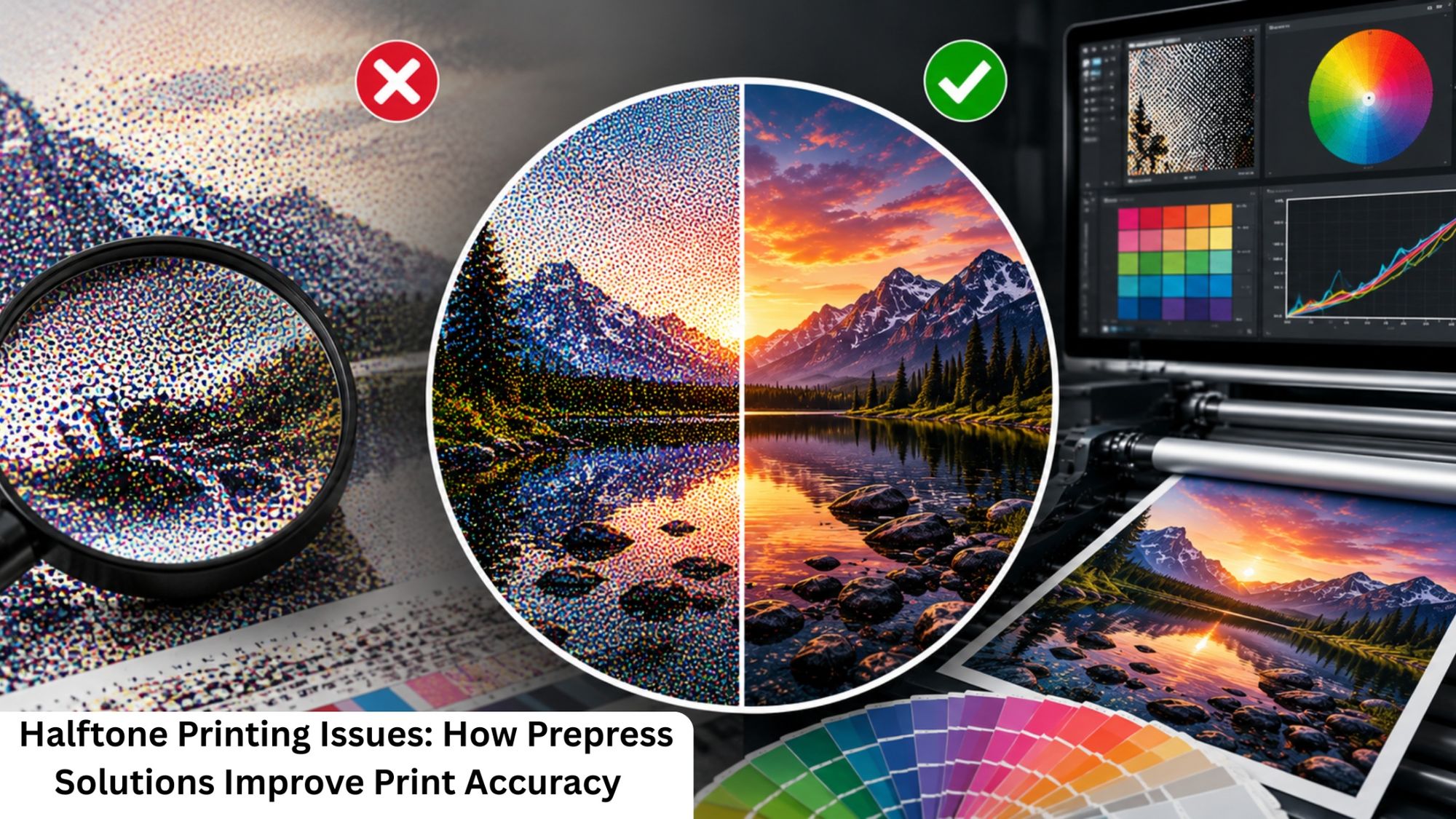
A design that appears perfect on a computer screen may result in soft shadows, blurry text, and dot patterns when printed. In many situations, the problem with the printing process is not the process itself, but the lack of preparation in the design artwork before it goes into production.
Also, when designing something that looks great on the screen and then turning into an unfocused, grainy, or patterned picture, people have reasons to be frustrated.
Often it results in wasted supplies, disappointed clients, and delayed production schedules. However, the problem very often lies not in the printing press itself but in the preparation of the files. Halftone printing requires precise image processing, and without proper prepress solutions, even a good design can yield poor results.
A proper prepress workflow will help you avoid typical printing problems early on and deliver clear pictures, sharp text, and accurate colors. According to Smithers, the printing industry is growing worldwide, which means there is a constant need for precise, high-quality printing production. This blog provides the halftone printing issues and how prepress solutions improve print accuracy.
The Basics Of Halftone Printing
Halftone printing uses a series of dots to simulate different tones. A traditional color printing press cannot rely on a smooth gradient. Rather, printing presses can only work with a series of dots for their color transitions.
At the reading distance, the dots merge, and photos and graphics look detailed and smooth. This printing technique is popular for the production of newspapers, magazines, brochures, catalogs, packages, labels, and marketing materials.
Despite its effectiveness, the smallest mistake in file preparation can degrade the image's quality.
Problems In Halftone Printing
Several problems may occur when printing if the files are not prepared properly.
Dot Gain
The most common problem in printing is dot gain. The ink spreads slightly on the paper, making the halftone dots larger than intended. It can cause such effects as:
- Color inconsistency.
- Contrast loss.
- Loss of shadow details.
On uncoated paper, a 20% tint can reproduce closer to 28–30%, making shadow regions noticeably darker unless compensation curves are applied.
Moire Patterns
Moire patterns appear when multiple screen angles overlap incorrectly. Smooth images are not produced; instead, distracting wave-like or ripple patterns appear on the print. These patterns become particularly noticeable in such cases:
- Fabric images.
- Fine textures.
- Scanned artwork.
- Printed reproductions.
Correct screen angle selection during prepress printing can eliminate this problem. A magazine printed at 175 LPI behaves very differently from corrugated packaging printed at 85 LPI.
Poor Print Registration Accuracy
In CMYK halftone printing, all cyan, magenta, yellow, and black plates must be aligned accurately. Even the slightest misalignment of those plates may cause:
- Blurred text.
- Colored outline.
- Double image.
- Blurry edges.
Excellent print registration accuracy is necessary for professional printing.
Wrong Screen Frequency
Screen frequency or LPI determines how many halftone lines fit into 1 inch. If the wrong LPI is chosen during publishing and printing, this will cause:
- Visible dot pattern
- Loss of image detail.
- Poor image reproduction quality.
- Too much ink coverage.
Matching the screen frequency with the paper type and printing process is an essential part of print preparation.
Low Print Resolution
Artwork with low print resolution may look good on a screen, but it can look pixelated after printing. Professional printing requires high-resolution images.
How Prepress Services Enhance Print Accuracy?
Professional prepress services help catch and fix issues before they reach the press. Fortunately, most of these major issues can be prevented long before a job reaches the press. That's where professional prepress services make the biggest difference.
Advanced Image Screening
Using modern image screening technology, digital artwork is turned into clean, optimized halftones. This process allows us to obtain:
- Improved image transition.
- Proper ink coverage.
- Improved detail reproduction.
- Smooth gradient transition.
Proper screening improves visual quality and production consistency.
Correct Color Splitting
Each color image needs the correct color split before printing. Prepress specialists divide the artwork into separate CMYK plates, so each color is printed accurately. This allows us to obtain:
- Proper skin tones.
- Brand-accurate colors.
- Better color balance.
- Better print result.
Without accurate separation, printed colors may look inaccurate or dull.
Dot Gain Compensation
An experienced prepress team accounts for dot gain even before production starts. Using special software, halftone values are adjusted based on the expected ink spread for specific paper stocks. This process leads to:
- Improved color reproduction.
- Better-balanced shadow areas.
- Improved highlights.
- Improved contrast.
Instead of fixing the problem after printing, dot gain gets predicted and managed beforehand.
Halftone Screening Optimization
Proper settings of halftone screening are based on such factors as:
- Type of ink.
- Complexity of the image.
- Type of paper.
- Type of printing.
A professional operator makes necessary adjustments to screen angles and frequencies to avoid pattern visibility while maintaining fine detail. This optimization significantly improves the quality of printed images.
Better Print Registration Precision
Advanced prepress computer programs can ensure print registration before the job reaches the press. This is achieved through the use of registration marks and trapping. Improving registration accuracy allows us to produce:
- Sharp text.
- Professional prints.
- Sharp graphics.
- Sharp edges.
The Importance Of Choosing The Right Screen Frequency
Selecting the appropriate screen frequency (LPI) is key to optimizing print quality.
LPI with low value is used for such products as:
- Newspapers
- Cardboard packages
- Rough paper stocks
LPI with high value is used for products such as:
- Premium magazines
- High-quality brochures
- Fine art printing
- Luxury packaging
Choosing the right screen frequency ensures the print image meets the desired quality standard.
Why Print Resolution Matters
Proper printing begins with well-prepared artwork. A low-resolution image cannot be fixed only by making it larger before production begins. This process allows us to avoid such problems as:
- Loss of details.
- Jagged edges.
- Pixelation.
- Soft images.
Sharp source files guarantee sharp printed results.
Print Quality Optimization Through File Preparation
Professional printing is possible not only due to good equipment. Print quality optimization includes several important prepress checks. These checks include:
- Checking the image resolution.
- Font embedding.
- Checking color profiles.
- Checking bleed and trim.
- Ink coverage checking.
- Flattening of transparency.
- Overprint settings.
- Checking file compatibility.
This kind of work before production helps reduce costly mistakes and increase production efficiency.
Industries Benefitting From Prepress Services
Numerous sectors require precise halftone reproduction on a daily basis. These sectors include: Commercial printing, packaging manufacturing, book publishing, magazine production, marketing agencies, label printing, pharmaceutical packaging, food packaging, and retail displays, all of which depend on accurate color and sharp image reproduction to maintain a professional look.
Tips On How To Get Better Halftone Printing Results
Some tips help businesses achieve better print results when applied.
- Using high-resolution images.
- Selecting the correct color profile.
- Matching the screen frequency to the paper stock.
- Performing accurate color separation.
- Verifying print registration before production.
- Careful reviewing of digital proofs.
- Cooperation with experienced prepress professionals.
- Producing print samples before full-scale production.
These simple steps help reduce waste and improve print consistency.
Achieve Better Quality Prints Using Professional Prepress Solutions
What is essential for obtaining good prints starts even before the ink comes into contact with the paper.
It is very important to ensure accuracy in controlling halftone screening, dot gain, and color separations, among other processes, during the prepress stage to achieve clean prints.
Having solid prepress solutions and reliable prepress printing services reduces costly mistakes and streamlines processes. The investment also pays off with consistent halftone printing quality for every project. Having prior experience in file preparation and print quality optimization enables high-quality, professional prints that meet the expectations of your target audiences and our brand.